Be sure to look at my update on Hurrell. I have gotten the book The Glamour of the Gods and it has some incredible and fascinating things to add. Please see it here:
http://draft.blogger.com/blogger.g?blogID=7570637570822170944#editor/target=post;postID=8933281930151823188;onPublishedMenu=allposts;onClosedMenu=allposts;postNum=42;src=postname
Enjoy! And more updates and news to come.
Showing posts with label George Hurrell. Show all posts
Showing posts with label George Hurrell. Show all posts
Friday, April 12, 2013

Saturday, February 26, 2011
The First Great Hollywood Woman Photographer: Ruth Harriet Louise
Born Ruth Goldstein on January 13, 1903 in New York City. She was raised in New Brunswick, New Jersey. Her father was a rabbi. In the summer of 1925, at the young age of 22 years old, she was hired by Metro Goldwyn Mayer as chief portrait photographer--the only woman doing so for the Hollywood studios at the time.
From 1925 to 1930, she many hopefuls, starlets and major performers including Greta Garbo, Lon Chaney, John Gilbert, Joan Crawford, Marion Davies, Norma Shearer, Lili Damita, Buster Keaton, Myrna Loy, Douglas Fairbanks Jr., Bessie Love, Lillian Gish, and Anna Sten.
About Bull's relationship with Louise from 'Glamour of the Gods' book:
After Clarence Sinclair Bull was doing the most time-consuming gallery sessions, Ruth Harriet Louise was hired in 1925 as MGM's portrait photographer. This was not a demotion for Bull, as Louise reported directly to Pete Smith, the head of publicity, and Bull's dutied remained unchanged. Still, Louise and Bull seem not to have got along, and he never mentioned her in interviews or his writings after she left MGM in 1929. Louise's work, however, did influence Bull, who started to emulate her soft-focus pictorialism in 1927. Perhaps challenged by Louise's talent and craft, by the end of the 1920s Bull had matured as a photographer. Though sometimes outshone by Louise in the late 1920s, and later by his colleague Hurrell in the early 1930s, at his best Bull was equal to both. Bud Graybill, who shot stills under Bull's supervision for over twenty years starting in the mid-1930s, described him in a letter to Kobal (dated 29 January 1978) as 'the quintessence of photographers. His negatives were near perfect in exposure... the imaginative work he did over a period of roughly 40 years was never topped.' After Louise left MGM at the end of 1929, Bull distinguished himself as Garbo's principal photogragher, which must have made him the envy of his peers regardless of studio.
She decided to retire from her career in 1930 to marry director Leigh Jason. Sadly, after ten years of martial bliss, she died on October 12, 1940 from complications from childbirth in Los Angeles, California.
From the book 'Glamour of the Gods', it further adds to Louise's biography:
Louise's brief reign as portrait studio chief lasted from mid-1925 to the end of 1929. To Louise goes the credit of being the photographer who fashioned Garbo's face into the timeless visage still immediately recognisable worldwide. Just twenty-two when she joined MGM in summer of 1925, Louise lost her job to George Hurrell four years later. Throughout the 1930s she occasionally took private comissions photographing stars such as Anna Stern (in 1932) and Myrna Loy (in 1935).
Louise died in childbirth in 1940, utterly forgotten by an industry she had worked assiduously to document. John Kobal avidly collected her original prints and acquired hundreds of her negatives. Of all the photographer's he introduced in his book in "The Art of the Great Hollywood Portrait Photographers," Louise's career was most in need of rehabilitation. Even her gender, which set her apart from all her contemporaries, had been insufficient reason to keep her memory alive.
Louise was among the first Hollywood photographers to break away from the old-fashioned convention of staid portrait shots and introduce the nuance of her sitter's perosnality. When she photographed stars in costume she attempted to find something of the character being portrayed. Kobal noted that she was 'in the vanguard of the phtographers who would revolutionize Hollywood portrait phtography.' Hollywood portraiture before Louise documented strong personas: Swanson's glamour, Chaplin's tramp, Pickford's waif. Louise took the screen personas of her favoirtie siters, such as Lon Chaney and Joan Crawford, and in her photograghs humanized them while never letting their star lustre diminsh. 'There is about Louise's work,' wrote Kobal in 1980, 'delicacy, a shy, appealing privacy, that established an immediate bond with the viewer," Her sujects liked her and trusted her, including the elusive Garbo. The two young women worked together, starting with Garbo's first portrait session in Hollywood, two months before she appeared on the set, through her ascent as MGM's greatest female draw. Louise's sensitive touch, along with the work of MGM's brilliant cinematograhers combined to create the face that enthralled moviegoers.
There has been discussion in Hollywood literature as to how much Louise relied on full-length shots, which she would then crop to make half-length or close-ups portraits. Kobal may have started this notion when he wrote about Louise. Although cropping was and remains a useful tool in most photographers' practice, in fact Louise took as many close-ups and (especially) medium shots as any of her contemporaries. Kobal identified correctly that many of Louise's famous compositions were derived from cropped negatives that found their final form in the darkroom. But Louise's surving negatives (numbering in the thousands)demonstrate without question that Louise shot regularly in close-up and medium shots and these also formed the basis for many of her most important photographs.
A couple of her relatives were also notables in Hollywood: her brother was director Mike Sandrich (he directed many Fred Astaire and Ginger Rogers musicials) and her cousin was silent film actress, Carmel Myers.
She took over 100,000 photographs during her stint at MGM and now she is considered on equal turf with other great photographers such as George Hurrell and Clarence Sinclair Bull among others. This also makes her original vintage photographs worth a pretty penny at auction as well.
I highly recommend the book, Ruth Harriet Louise and Hollywood Glamour Photography by Robertson and Dance (2002). Here is a link for the book:
http://www.ucpress.edu/book.php?isbn=9780520233485
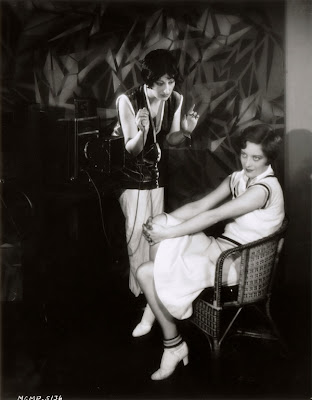
The photos below show why she is on par with Hurrell and other greats:


From 1925 to 1930, she many hopefuls, starlets and major performers including Greta Garbo, Lon Chaney, John Gilbert, Joan Crawford, Marion Davies, Norma Shearer, Lili Damita, Buster Keaton, Myrna Loy, Douglas Fairbanks Jr., Bessie Love, Lillian Gish, and Anna Sten.
About Bull's relationship with Louise from 'Glamour of the Gods' book:
After Clarence Sinclair Bull was doing the most time-consuming gallery sessions, Ruth Harriet Louise was hired in 1925 as MGM's portrait photographer. This was not a demotion for Bull, as Louise reported directly to Pete Smith, the head of publicity, and Bull's dutied remained unchanged. Still, Louise and Bull seem not to have got along, and he never mentioned her in interviews or his writings after she left MGM in 1929. Louise's work, however, did influence Bull, who started to emulate her soft-focus pictorialism in 1927. Perhaps challenged by Louise's talent and craft, by the end of the 1920s Bull had matured as a photographer. Though sometimes outshone by Louise in the late 1920s, and later by his colleague Hurrell in the early 1930s, at his best Bull was equal to both. Bud Graybill, who shot stills under Bull's supervision for over twenty years starting in the mid-1930s, described him in a letter to Kobal (dated 29 January 1978) as 'the quintessence of photographers. His negatives were near perfect in exposure... the imaginative work he did over a period of roughly 40 years was never topped.' After Louise left MGM at the end of 1929, Bull distinguished himself as Garbo's principal photogragher, which must have made him the envy of his peers regardless of studio.
She decided to retire from her career in 1930 to marry director Leigh Jason. Sadly, after ten years of martial bliss, she died on October 12, 1940 from complications from childbirth in Los Angeles, California.
From the book 'Glamour of the Gods', it further adds to Louise's biography:
Louise's brief reign as portrait studio chief lasted from mid-1925 to the end of 1929. To Louise goes the credit of being the photographer who fashioned Garbo's face into the timeless visage still immediately recognisable worldwide. Just twenty-two when she joined MGM in summer of 1925, Louise lost her job to George Hurrell four years later. Throughout the 1930s she occasionally took private comissions photographing stars such as Anna Stern (in 1932) and Myrna Loy (in 1935).
Louise died in childbirth in 1940, utterly forgotten by an industry she had worked assiduously to document. John Kobal avidly collected her original prints and acquired hundreds of her negatives. Of all the photographer's he introduced in his book in "The Art of the Great Hollywood Portrait Photographers," Louise's career was most in need of rehabilitation. Even her gender, which set her apart from all her contemporaries, had been insufficient reason to keep her memory alive.
Louise was among the first Hollywood photographers to break away from the old-fashioned convention of staid portrait shots and introduce the nuance of her sitter's perosnality. When she photographed stars in costume she attempted to find something of the character being portrayed. Kobal noted that she was 'in the vanguard of the phtographers who would revolutionize Hollywood portrait phtography.' Hollywood portraiture before Louise documented strong personas: Swanson's glamour, Chaplin's tramp, Pickford's waif. Louise took the screen personas of her favoirtie siters, such as Lon Chaney and Joan Crawford, and in her photograghs humanized them while never letting their star lustre diminsh. 'There is about Louise's work,' wrote Kobal in 1980, 'delicacy, a shy, appealing privacy, that established an immediate bond with the viewer," Her sujects liked her and trusted her, including the elusive Garbo. The two young women worked together, starting with Garbo's first portrait session in Hollywood, two months before she appeared on the set, through her ascent as MGM's greatest female draw. Louise's sensitive touch, along with the work of MGM's brilliant cinematograhers combined to create the face that enthralled moviegoers.
There has been discussion in Hollywood literature as to how much Louise relied on full-length shots, which she would then crop to make half-length or close-ups portraits. Kobal may have started this notion when he wrote about Louise. Although cropping was and remains a useful tool in most photographers' practice, in fact Louise took as many close-ups and (especially) medium shots as any of her contemporaries. Kobal identified correctly that many of Louise's famous compositions were derived from cropped negatives that found their final form in the darkroom. But Louise's surving negatives (numbering in the thousands)demonstrate without question that Louise shot regularly in close-up and medium shots and these also formed the basis for many of her most important photographs.
A couple of her relatives were also notables in Hollywood: her brother was director Mike Sandrich (he directed many Fred Astaire and Ginger Rogers musicials) and her cousin was silent film actress, Carmel Myers.
She took over 100,000 photographs during her stint at MGM and now she is considered on equal turf with other great photographers such as George Hurrell and Clarence Sinclair Bull among others. This also makes her original vintage photographs worth a pretty penny at auction as well.
I highly recommend the book, Ruth Harriet Louise and Hollywood Glamour Photography by Robertson and Dance (2002). Here is a link for the book:
http://www.ucpress.edu/book.php?isbn=9780520233485
The photos below show why she is on par with Hurrell and other greats:

Anna Sten


She took many spectacular photos of Joan Crawford...


... And of Greta Garbo

Norma Shearer

Dorothy Sebastian

Mary Nolan and Joan Crawford

Mae Murray

Buster Keaton

Marion Davies

Lili Damita

Profile shot of Lillian Gish.

Anita Page

Bessie Love

An example of her embossed stamp.

An example of her ink stamp which is also sometimes in a dark red color.

This is what the great lady Ruth looked like herself, just like one of the many stars she photographed.
Ruth and one of her greatest subjects, Crawford below:

Monday, February 21, 2011
The Legendary Glamour of George Hurrell Photography
Along with Clarence Sinclair Bull, George Hurrell helped create the ideal standards of high end Hollywood Glamour in photography.
But while Bull showed an early interest in photography, Hurrell was actually initially more interested in painting. The only reason he got into photography was to make a record of his paintings. Hurrell was born in Covington, Kentucky and eventually moved to Chicago, Illinois. But in 1925 he found, when he relocated to Laguana Beach, California, that there was more of a profitable interest in photography.
In the later 1920s, Hurrell was introduced to actor Ramon Navarro and took a series of photographs of him. Navarro was significantly impressed enough to show the results to actress Norma Shearer who in turn sought to use Hurrell to change her wholesome image to a more provocative one. Shortly after, Shearer showed the finished photos to her husband, MGM production chief, Irving Thalberg. Thalberg signed Hurrell to a contract with MGM as the head of the portrait photography department.
However, in 1932, Hurrell left MGM and opened his own studio on Sunset Boulevard. Throughout the 1930s and 1940s, Hurrell photographed just about every major star in the industry including Myrna Loy, Robert Montgomery, Jean Harlow, Joan Crawford, Clark Gable, and Carole Lombard. In the 1940s, he moved to working for Warner Brothers Studios and photographed Bette Davis, Ann Sheridan, Errol Flynn, Maxine Fife, Humphrey Bogart, and James Cagney. Later in the same decade, he again moved--this time to Columbia Pictures--and photographed Rita Hayworth among others.
While he also photographed Greta Garbo for the film Romance, the two did not hit it off and Garbo preferred to keep Clarence Sinclair Bull as her official photographer. However, Norma Shearer, who adored Hurrell, kept his as her exclusive photographer.
From the book, Glamour of the Gods:
George Hurrell started work at MGM at the beginning of 1930 and almost immediately tranformed Hollywod photography. Brought to MGM at the insistence of Norma Shearer, his task was to make his subjects, especially women, sexy. Not only did he succeed but his work, in this respect, has never been bettered. Norma Shearer was an attractive and talented actress, who through determination and fortitude, not to mention marriage to MGM's top producer Irving Thalberg, managed to secure most of the studio's choicest femail roles. But she found herself increaslingly cast as the nice girl or sophisticated matron when she wanted the racier roles given to Joan Crwford and Greta Garbo. Hurrell changed Shearer's appearace, at least in the portrait gallery, and there is no question that the lovely lady portrayed by Ruth Harriet Louise took on a new smoldering guise when seen through Hurrell's lens. Hurrell's very best work was saved for Joan Crawford who probably enjoyed being photographed more than any actress before Marilyn Monnroe. Of the approximately 100,000 photographs that were coded by MGM's publicity department between 1924 and 1942, Crawford's face appears more often than that of any other star. Hurrell and Crawford enjoyed an extraordinary collaboration, beginninng at MGM and continuing after he went independent in late 1932. Hurrell could be almost brutal with his sitters, subjecting them variously to strong lights, extreme close-ups, and complicated positions. Crawford survived all of Hurrell's antics and her allure was only heightedned by his inventive camerawork.
Glamour was Hurrell's hallmark and he saved the best for his ladies. Harlow reached her peak of sexual allure in front of Hurrell's lens, as did Carole Lombard and Veronica Lake when he shot portraits for Paramount. As good as Hurrell was in the 1930s, his 1943 photographs of Jane Russell in the hay, taken to promote "The Oulaw," are porably his most famous and frequently reproduced.
Hurrell did not have the temperament to last long as part of a studio team. He remained available to MGM on a contract basis throughout the 1930s photographing Harlow, Gable and Crawford among others, both at his studio and at MGM. MGM seemed to have been grooming Harvey White to take Hurrell's place, but he lasted at the studio less than a year. The work by White that survives includes copious shots of Jean Harlow on the set for "Dinner at 8."
John Kobal (the famous chronicler of Hollywood) and Hurrell must have enjoyed swapping tales about Marlene Dietrich, who, when Kobal met her in 1960, was in the midst of a second career as a concert performer. A quarter of a century earlier she was one of Hollywoods reigning queens and for six years, beginning when she came to Hollywood in 1930, Dietrich's star shone brightly, especially in a series of films made at Paramount and directed by Joseph von Sternberg. But two duds released in 1937, "Knight Without Armour" and "Angel", saw her value sink rapidly and she was dropped from the Paramount roster. Strategically, and in an attempt to bolster her career, she commissioned a series of portraits from Hurrell. The feathered hat and chiffon dress she selected for the session obviously pleased both actress and photographer, and the results proved that, although her film career might be faltering, she was as beautiful as ever. Two years later she was back with one of her greatest hits, "Destry Rides Again"--but it was a western and made at Universal, something of a comedown for a Paramount star. Might Hurrell's dazzling portraits have helped her secure the role?
For a time, Hurrell left Hollywood to make training films for the United States Army. But, when he tried to return to Hollywood in mid 1950s, he found that his original style of glamour photography was no longer in vogue. So he decided instead to venture to New York, where he photographed for fashion magazines and did advertisements for various products.
However, his initial style did not fall out of favor for long. In 1965, a revival of his work was exhibited at The Museum of Modern Art in New York and it caused a sensation. He began to work again returning to Hollywood and photographing occasionally but by the 1970s he was in full swing again taking photos of such new stars as Raquel Welch, Farrah Fawcett and John Travolta.
He decided to retire though in 1976. Nevertheless, he sporatically would photograph certain new stars if he found an interest in them. Sharon Stone, Brooke Shields, and Shannon Tweed were among those he felt imparted the same kind of glamour that he was famous for shooting in the Hollywood heydays.
In addition, in 1984, he could not say no when Joan Collins (then hot off Dynasty) said that he would be the only photographer she would allow to photograph her in the nude for a spread that Playboy was proposing. In turn, Hurrell photographed the classy 50 year old star in some page layout shots and the subsequent issue became a best seller.
Lastly, he created publicity photos of Annette Benning and Warren Beatty for the film "Bugsy" and Natalie cole for her album Unforgettable ... with Love.
Around the same time, there was a documentary being made about his life and he did his last legendary style shots of actors Sherilyn Fenn, Sharon Stone, Julian Sands, Raquel Welch, Eric Roberts and Sean Penn.
After the documentary was completed, he fell ill from complications from a reaccuring problem with bladder cancer. He passed away May 17, 1992.
Like C. S. Bull, his photographs have appreciated in value over time. His work is highly sought after by art dealers and collectors.
Here is some discussions on Hurrell's techniques:
http://photo.net/photography-lighting-equipment-techniques-forum/00IDQ3
http://www.hurrellphotography.com/Hurrell/legends3.html
http://www.portraitsecrets.com/Glamour.shtml
http://dynamist.com/articles-speeches/atlantic/hurrell.html
Here are some examples of his work:


But while Bull showed an early interest in photography, Hurrell was actually initially more interested in painting. The only reason he got into photography was to make a record of his paintings. Hurrell was born in Covington, Kentucky and eventually moved to Chicago, Illinois. But in 1925 he found, when he relocated to Laguana Beach, California, that there was more of a profitable interest in photography.
In the later 1920s, Hurrell was introduced to actor Ramon Navarro and took a series of photographs of him. Navarro was significantly impressed enough to show the results to actress Norma Shearer who in turn sought to use Hurrell to change her wholesome image to a more provocative one. Shortly after, Shearer showed the finished photos to her husband, MGM production chief, Irving Thalberg. Thalberg signed Hurrell to a contract with MGM as the head of the portrait photography department.
However, in 1932, Hurrell left MGM and opened his own studio on Sunset Boulevard. Throughout the 1930s and 1940s, Hurrell photographed just about every major star in the industry including Myrna Loy, Robert Montgomery, Jean Harlow, Joan Crawford, Clark Gable, and Carole Lombard. In the 1940s, he moved to working for Warner Brothers Studios and photographed Bette Davis, Ann Sheridan, Errol Flynn, Maxine Fife, Humphrey Bogart, and James Cagney. Later in the same decade, he again moved--this time to Columbia Pictures--and photographed Rita Hayworth among others.
While he also photographed Greta Garbo for the film Romance, the two did not hit it off and Garbo preferred to keep Clarence Sinclair Bull as her official photographer. However, Norma Shearer, who adored Hurrell, kept his as her exclusive photographer.
From the book, Glamour of the Gods:
George Hurrell started work at MGM at the beginning of 1930 and almost immediately tranformed Hollywod photography. Brought to MGM at the insistence of Norma Shearer, his task was to make his subjects, especially women, sexy. Not only did he succeed but his work, in this respect, has never been bettered. Norma Shearer was an attractive and talented actress, who through determination and fortitude, not to mention marriage to MGM's top producer Irving Thalberg, managed to secure most of the studio's choicest femail roles. But she found herself increaslingly cast as the nice girl or sophisticated matron when she wanted the racier roles given to Joan Crwford and Greta Garbo. Hurrell changed Shearer's appearace, at least in the portrait gallery, and there is no question that the lovely lady portrayed by Ruth Harriet Louise took on a new smoldering guise when seen through Hurrell's lens. Hurrell's very best work was saved for Joan Crawford who probably enjoyed being photographed more than any actress before Marilyn Monnroe. Of the approximately 100,000 photographs that were coded by MGM's publicity department between 1924 and 1942, Crawford's face appears more often than that of any other star. Hurrell and Crawford enjoyed an extraordinary collaboration, beginninng at MGM and continuing after he went independent in late 1932. Hurrell could be almost brutal with his sitters, subjecting them variously to strong lights, extreme close-ups, and complicated positions. Crawford survived all of Hurrell's antics and her allure was only heightedned by his inventive camerawork.
Glamour was Hurrell's hallmark and he saved the best for his ladies. Harlow reached her peak of sexual allure in front of Hurrell's lens, as did Carole Lombard and Veronica Lake when he shot portraits for Paramount. As good as Hurrell was in the 1930s, his 1943 photographs of Jane Russell in the hay, taken to promote "The Oulaw," are porably his most famous and frequently reproduced.
Hurrell did not have the temperament to last long as part of a studio team. He remained available to MGM on a contract basis throughout the 1930s photographing Harlow, Gable and Crawford among others, both at his studio and at MGM. MGM seemed to have been grooming Harvey White to take Hurrell's place, but he lasted at the studio less than a year. The work by White that survives includes copious shots of Jean Harlow on the set for "Dinner at 8."
John Kobal (the famous chronicler of Hollywood) and Hurrell must have enjoyed swapping tales about Marlene Dietrich, who, when Kobal met her in 1960, was in the midst of a second career as a concert performer. A quarter of a century earlier she was one of Hollywoods reigning queens and for six years, beginning when she came to Hollywood in 1930, Dietrich's star shone brightly, especially in a series of films made at Paramount and directed by Joseph von Sternberg. But two duds released in 1937, "Knight Without Armour" and "Angel", saw her value sink rapidly and she was dropped from the Paramount roster. Strategically, and in an attempt to bolster her career, she commissioned a series of portraits from Hurrell. The feathered hat and chiffon dress she selected for the session obviously pleased both actress and photographer, and the results proved that, although her film career might be faltering, she was as beautiful as ever. Two years later she was back with one of her greatest hits, "Destry Rides Again"--but it was a western and made at Universal, something of a comedown for a Paramount star. Might Hurrell's dazzling portraits have helped her secure the role?
For a time, Hurrell left Hollywood to make training films for the United States Army. But, when he tried to return to Hollywood in mid 1950s, he found that his original style of glamour photography was no longer in vogue. So he decided instead to venture to New York, where he photographed for fashion magazines and did advertisements for various products.
However, his initial style did not fall out of favor for long. In 1965, a revival of his work was exhibited at The Museum of Modern Art in New York and it caused a sensation. He began to work again returning to Hollywood and photographing occasionally but by the 1970s he was in full swing again taking photos of such new stars as Raquel Welch, Farrah Fawcett and John Travolta.
He decided to retire though in 1976. Nevertheless, he sporatically would photograph certain new stars if he found an interest in them. Sharon Stone, Brooke Shields, and Shannon Tweed were among those he felt imparted the same kind of glamour that he was famous for shooting in the Hollywood heydays.
In addition, in 1984, he could not say no when Joan Collins (then hot off Dynasty) said that he would be the only photographer she would allow to photograph her in the nude for a spread that Playboy was proposing. In turn, Hurrell photographed the classy 50 year old star in some page layout shots and the subsequent issue became a best seller.
Lastly, he created publicity photos of Annette Benning and Warren Beatty for the film "Bugsy" and Natalie cole for her album Unforgettable ... with Love.
Around the same time, there was a documentary being made about his life and he did his last legendary style shots of actors Sherilyn Fenn, Sharon Stone, Julian Sands, Raquel Welch, Eric Roberts and Sean Penn.
After the documentary was completed, he fell ill from complications from a reaccuring problem with bladder cancer. He passed away May 17, 1992.
Like C. S. Bull, his photographs have appreciated in value over time. His work is highly sought after by art dealers and collectors.
Here is some discussions on Hurrell's techniques:
http://photo.net/photography-lighting-equipment-techniques-forum/00IDQ3
http://www.hurrellphotography.com/Hurrell/legends3.html
http://www.portraitsecrets.com/Glamour.shtml
http://dynamist.com/articles-speeches/atlantic/hurrell.html
Here are some examples of his work:

Gene Tierney


Jean Harlow

Norma Shearer

Miriam Hopkins

Joan Crawford


Carole Lombard.

A color photograph by Hurrell of Linda Darnell.
 One of his later subjects, Sharon Stone.

Here are some photos of Hurrell on the set with some of the stars he photographed.


Hurrell with Jane Russell.

With Olivia De Havilland.

Looking over some of his many great photos.


With Robert Montgomery.
Here is a recent auction from Ebay where this Joan Crawford photograph went for 4, 995.00. Notice the next photo shows the Hurrell ink stamp and the MGM one for star Crawford:


Another example of a Hurrell stamp and a press snipe.

Here are some more examples of Hurrell's work:
And here are some of the male stars he photographed:
Thanks to Vince for these links!
Subscribe to:
Posts (Atom)