A note about his photography in Germany is that between 1933 and 1937 he was unable to obtain the necessary permits, (because Adolf was in charge? not sure) so any photographs reproduced in German photo annuals during this period were credited to his mother, Margaret Willinger.
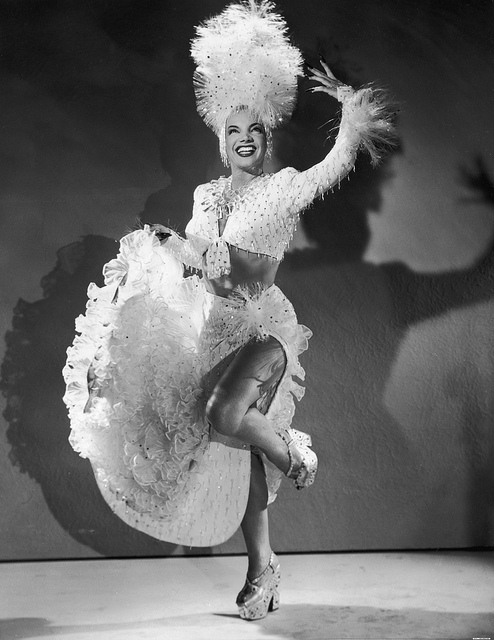
At that time, he worked as a freelance photojournalist for Berliner Illustrierte, Hamburger Illustrierte, and Munchener Illustrierte, stringer for London Daily Express and Keystone View, and at Talbot Studio, Paris, as advertising and portrait photographer. Subjects include Josephine Baker, President Paul Doumer, Sacha Guitry, and Yvonne Printemps
He left Berlin in 1933 when Adolf Hitler became Chancellor, settling and working in Vienna where he began to photograph such celebrities as Hedy Lamarr, Pietro Mascagni, Sigmund Freud, Carl Jung, and Max Reinhardt. He then established himself in European film studios as one of the foremost photographers of the period, taking photos of Marlene Dietrich, Emil Jannings, Isa Miranda and Zarah Leander.
By the mid-1930s he was travelling through Africa and Asia before being invited in 1932 for his first visit to America on an assignment for Mercedes-Benz. But while still in Vienna he met with Louis B. Mayer, who was looking for talent for MGM Studios. Willinger was asked by Mayer along with Hedy Lamarr – to come and stay permanately in Hollywood and hence, the two came to Hollywood together. He then met up with another movie photographer at the time, Eugene Robert Richee who convinced Willinger to stay in the United States. After establishing a studio in Hollywood, California, Willinger became a frequent contributor to magazines and periodicals, providing magazine cover portraits of some of the most popular stars. Willinger was one of the first Hollywood photographers to experiment in the use of color.
Laszlo Willinger became Ted Allan's successor at MGM. Hungarian-born Willinger came to MGM in 1937 as part of the studio's last European sweep for talent before the outbreak of the Second World War. He had already established himself as one of the foremost photographers of the period (while still in Vienna), taking photos of Marlene Dietrich, Emil Jannings, Isa Miranda and Zarah Leander. So no wonder he ended up in Hollywood, California. And by 1937, Hedy Lamarr and Luise Rainer were signed at the time to MGM.
At first Willinger was reticent about speaking of the past because he felt there was little interest in the Hollywood of the 1930s and 1940s. John Kobal--who was then working on a retrospective of several vintage Hollywood photographers--convinced Willinger that he was interested, and the two developed a friendship.
Willinger brought a fresh look to MGM and Hollywood photography--his prints have a crisp luminescence and his compositions often orient his subjects on the diagonal, which gives them a modern, European sophistication. "I tried to make a photograph as dramatic as possible," Willinger wrote in 1986, "by lighting dramatically." As he did with Hurrell, Kobal anxiously queried the veteran photographer about photographic practices. Willinger recounted to Kobal, "Loads of photos were taken and the negatives were sitting around, but they were never used because the stars vetoed them." Even though MGM's first lady, Norma Shearer, wanted Willinger to make all her portraits after 1937, and he did photograph her beautifully for Marie Antoniette (1937) and later films including 'The Women' (1939), that didn't guarantee the road would be easy. "If Shearer liked 10 percent of a setting," Willinger told Kobal, "you were going great. With Crawford you could figure 80 percent would be okay. The one I liked best to work with was Vivien Leigh. She was a thorough professional."
Along with Leigh, Willinger photographed the new stars that MGM cultivated in the early 1940s to replace old-timers such as Garbo and Shearer who were retiring or Crawford who was being forced out of the studio. Looking back on his career, Willinger wrote, "I photographed what there ought to be." Stars hired by MGM in the 1940s, such as Donna Reed and John Garfield, gave him pretty good raw material. So too did tireless cinema verteran Marlene Dietrich. Willinger's 1942 portrait reveals that Paramount's great star of the 1930s had lost none of her authority with the camera.
Recalling the 30’s and 40’s, Willinger said he didn’t think there was any time in history when more people so talented on every level had ever been together as in the Hollywood of those decades. For those of us who didn’t live them, those years seem so glamorous and exciting, especially when reflected through the brilliance of this legendary Hollywood photographer.
Willinger acted as the art director when photographing the stars. The only thing expected of him was to make images that the press would choose to print over everyone else’s. There could be up to 5000 pictures available on any major star. To get printed, your photograph had to be the best. One thing he always kept in mind, regardless of the subject, is that the photograph has a purpose – and that’s to sell. Consider when someone thumbs through a magazine; he spends about 1/3 second on each page. If your photograph can make him look for three seconds – that’s one good shot! He felt that photographs had to stand on their own – without caption. If you had to explain it, it wasn’t good.
One known fact about photographs from Willinger’s time was that all photos of stars were heavily retouched. In its prime, MGM alone employed around 20 retouchers! Amazing if these actors were so good looking, why all the retouching? Willinger’s reply: “There’s always room for improvement. Also, don’t forget that in those days they used a water-based Max Factor make-up, which had to be applied thickly in order to be smoothed out properly. Unfortunately, it wasn’t good for the skin, and often created pockmarks. When you photographed actors who had been using it for 20 – 30 years, you were dealing with some terrible, ruined complexions.”
Until his resignation from MGM in 1944, he was the studio's top photographer, shooting all of their stars and replacing George Hurrell as personal photographer to Norma Shearer and Joan Crawford. Although by the early 1940s Hollywood Glamour photography was entering its decline, Willinger brought a freshness and energy to his portraits and gave his subjects a quality of intelligence. He described what it was like to work with the studio's leading stars:
"A sitting with Shearer, that was like the King of England traveling. First there would be a great deal of diplomatic back and forth before I was even notified that she was available. I'd get a stage, set up fifteen to twenty sets, and light them, so that all she had to do was to move from one set to another. She had photos of the sets before she agreed. If that was okay, then you were finally told, 'Thursday, 11 a. m., Miss Shearer.' Thursday I'd be there with a makeup woman, a hairdresser, a man from Publicity to keep her busy and see that she turned up, two or three electricians, depending on the size of the set, prop man and, a grip and a flower man... and my own two assistants. After three or four last-minute cancellations (that's the way she operated--that's the way all stars operated), she would show up. Then she worked. And she would work hard. Once you had her you tried to take as many pictures as you could because you knew you wouldn't have her for another six months. A good session with her or Crawford would be two to three hours. By that time everybody was pretty tired. Changing clothes, which had to be done between each setup, is tiring.
Crawford was a woman who worked with the photographer rather than saying, 'Show me what you can do.' She would suggest things. She was a harder worker than anybody I knew. She loved being photographed. And that shows.
Glamour was one of the few English words I'd never heard before I went to America. I remember once talking to Howard Strickling, and he said, 'I want lots of glamour,' and I said, 'What's glamour?' And he said, 'You know, a sort of suffering look.' So there wasn't much laughing in those photos. You couldn't have happy sex. Sex and earnestness--together those spelled glamour.
When I started out in Germany in the late 1920s, photograhers used either daylight or a very diffused light. I never did. I used spots--arcs, which give you a point source of light.
Dietrich lent herself to the dramatic lighting von Sternberg set up for her, and so did Crawford because her eyes were very large. But you couldn't have used that won Sternberg lighting on Shearer--her eyes wouldn't have shown at all. When Hedy Lamarr made her first film at MGM, they were specifically trying to make her into a new Dietrich, and they photographed her using the Dietrich lighting setup. So this light doesn't quite work. For one thing, her face was a little rounder. So this light doesn't quite work for everybody--you need a specific kind of face for it."
Willinger also recalled the reaction of the head of the publicity department to his first day's work: "How many pounds of negatives have you done? Is that all you've shot today? This isn't heavy; usually we geet two or three pounds of negatives."
Doing art at the studio was another way the publicity department controlled things and got what they required. Willinger, who photograhed countless campaigns, pointed out: "The artists working in the advertising deparatment would make rough sketches of the billboards, with the logo on it, and I had to fit my pictures into the existing format. The whole thing was planned precisely." The studio tried to take most of its portraits, advertising, and expolitation art before the picture ever started, so that when the cameras began to turn, the unit photographer could concentrate on shooting production stills and timely publicity art.
Willinger said that when he got to Hollywood, you couldn't show cleavage. "There was a whole group of retouchers at every studio who did nothing but take the cleavage out of breasts. In those days the stars had a breast that stretched from shoulder to shoulder, creating a new breed of cyclops-chested women. You couldn't show the inside of a thigh, Have you ever tried to photograph a dancer and not show the inside of a thigh? You can't. When you shot doubles, there were very strict rules. For instance, in clinches the man always had to be higher than the woman, because it wasn't considered nice otherwise. The men had to wear ties and jackets. And if you shot a man in bathing trunks or a gymnasium outfit, there couldn't be any unseemly bumps, and the body hair had to be retouched."
But if a film failed, stars could put it off on the story, their co-star, or director, ect. But in the gallery, they were alone. Willinger eplains: "Suddenly you see the private person. People become actors for the purpose of not showing their private selves, and when they don't have a role to hide behind, it's always a problem. Especially for a pretty woman. Men don't care as much; anyway, they don't dare admit it. But women are more aware of age and of the younger girls coming up behind them."
Sometimes the stars acted like prima donnas and wanted their wish granted when they wanted it. Willinger recalled: "The night before Christmas, after the studio party, I went home. I got a call saying Jeanette MacDonald wants you. That was enough. You weren't asked. You were told. I went back to the studio. A complete camera crew was assembled on one side of the stage. We were there for a couple of hours doing tests--on her eyelashes. I never found out if she used the new ones--each eyelash was gluded to her lids separtely. The absurdity of it--any time--but Christmas Eve!"
The problems could get worse if you had two prima donnas at the same time. Willinger's assignments for The Women (1939 MGM) with two older stars and some other new ones. Case in point, was the all-female cast of that film. Arch rivals, Norma Shearer and Joan Crawford squared off. It came to a ridiculous surface in Willinger's gallery. Both stars wanted him to do their portraits and both had the right to reject photos they didn't like. In shots of the two of them together, countless prints were rejected. Willinger described what it was like:
"Shearer would look at the prints first and say 'Gee, this is a beautiful picture of me, but I really don't like the way Crawford looks." And then Joan would have her turn and we'd have the same thing. It's a wonder any pictures of them were released at all.
There were two on that film who were easy to work with--Paulette Goddard, because she was ambitious and Rosalind Russell, because she didn't give a damn. As a result Goddard got practically 90 percent of the stuff that was published, because she made herself available.
One day the three principals took off from filming, just so we could shoot stills. The call was for ten a. m. I'm up there ready--nobody. It's ten-thirty, eleven--still nobody. Finally Rosalind Russell turns up and says, 'Sorry I'm late.' I told her 'You're not late. You're the first one here.' I walked outside around saw people waiting, including a flower man in case one of them wanted a flower. (I couldn't give them the flower, because that would have been against union rules, and everybody would have walked off.) Finally I saw Norma Shearer's car drive by. It slowed down. She looked out and continued driving around the block. A little behind her was Joan Crawford, who also slowed down, looked out and drove on. I thought 'What the hell's going on here?' I called (publicity director Howard) Stricking and told him, 'There are two stars outside driving around the stage and not coming in.' He said, 'Don't you know what they're doing? Shearer isn't going to come in before Crawford and Crawford isn't goig to come in before Shearer. The only thing I can do is to stand in the middle of the street and stop them.' Which he did."
The men actors considered sitting for portraits 'sissy stuff' and complained about the amount of time it took to get all the photos the studio required. Willinger says: "Spencer Tracy would cut a session down to ten minutes--moving his head from right to left and say goodbye. He was less abrupt when Miss Hepburn was there though."
Willinger might have been happy to part company on portraits when it came to Norma Shearer. Eric Carpenter, another great Hollywood photograher in his own right, said: "My first solo assignment --and this was a case of make or break--was to photograph Norma Shearer. Willinger had been doing her portraits up until then, but I had heard that he wasn't happy just being her photographer, and she wanted someone loyal to her, so she was trying out new photographers. If she approved, I as in. Lucky for me she did."
Laszlo Willinger left MGM in 1944 to do various things for stock photography but he also did do some fine young starlet photographs. Laszlo Willinger was also a photographer in Norma Jeane's early modeling career. Willinger was not the most complimentary person, as even after Norma Jeane became famous, as Marilyn Monroe, he said of her: "Marilyn Monroe is not a raving beauty, and her legs are too short for the rest of her."
Perhaps his best known Marilyn shot is a calendar photo of Norma Jeane as she was still known, in a gold bathing suit. He was responsible for many of her early magazine covers. In 1986 he told LA Style magazine that Marilyn responded to his inquiry as to why she had such chemistry with the camera, by answering, "It's like being screwed by a thousand guys and you can't get pregnant."
He also said of her: "She had a talent to make people feel sorry for her, and she exploited it to the best of her ability - even people who had been around and knew models fell for this 'Help Me' pose."
After that he shot exclusively for advertising and stock photography. For 40 years he was at FPG, an agency in New York where he had something in the range of 50,000 transparencies on file.
After many years of rivaling Hurrell and Bull, he turned his talents towards shooting animals, children, scenes, flowers, people, etc. and built a library of stock photography and had representatives in Europe, the United States and Asia – in addition to working with John Kobal and Edward Weston.
Ed Weston lived in Los Angeles and New York and Willinger in the San Fernando Valley so they were geographically close which enabled them to become well acquainted. Weston purchased many original vintage, period and signed Hollywood Glamour photographs, negatives and rights doing glamour posters and prints which Willinger signed in limited edition.
Willinger died of heart failure in 1989, leaving behind his wife Yvonne. Upon Laszlo Willinger’s death, Ann and Edward Weston continued their relationship with Yvonne Willinger; help sell the Willinger home, advise her about legal documents and paperwork and aided her in moving back to England. Weston would meet with Mrs. Willinger in London over the years and her trips to Los Angeles - staying with both her own family and at the Weston’s house as well.
Mrs. Willinger was working on a book on Willinger’s career, which, unfortunately was never completed. It was to cover their love affair over 50 years, life in Germany during the Nazi period, Laszlo’s move to Vienna in the 1930’s, his famous photograph of Sigmond Freud and his meeting with Louis B. Mayer. The rest is history! Filling George Hurrell’s shoes wasn’t easy but talent will win out. But Willinger did a fine job of it.
Willinger's portraits have become collectible and are appreciated as fine art. His 1940 series of portraits of actors Laurence Olivier and Vivien Leigh are housed in London's National Portrait Gallery.
Here are some examples of his work:

Norma Shearer


Joan Crawford


Crawford, Shearer and Rosalind Russell for "The Women."

Marlene Dietrich

Ann Sothern

Ava Gardner

Hedy Lamarr


Lena Horne

Laurence Oliver

Maureen O'Sullivan

Myrna Loy


Robert Taylor

Rosalind Russell

Spencer Tracy

Myrna Loy and William Powell in "The Thin Man" series.

Clark Gable

Tyrone Power
And here are some great and lovely photos of Vivien Leigh when she did the famous film "Waterloo Bridge."


Marilyn Monroe
His use of color:

Lana Turner

Rosalind Russell

Norma Jean AKA Marilyn Monroe

Paulette Goddard showcasing one of many cover shots he did.

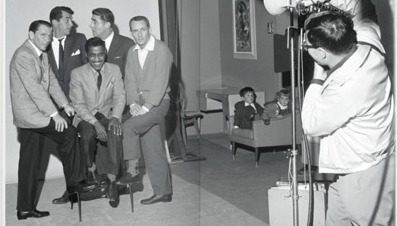
Willinger himself at the studio and with other stars and alone as an elderly man.


His official Stamp
PS: In his early work he did do some professional nudes for magazines like this one:

And in his later years he did this photo of Sigmund Freud: